
Chasing the Northern Lights in Kiruna: Expert Facts & Myths by Rawnorth Adventures

Seeing the Northern Lights in Kiruna isn't just about looking up; it’s about understanding the Arctic environment. After six years of running Rawnorth Adventures, I’ve seen that the difference between a "green smudge" and a life-changing display usually comes down to three things: expertise, movement, and a lot of patience.

Fact 1: Temperature Has Nothing to Do with Solar Activity
A common question I get on my tours is: "Does it need to be -30°C for the lights to come out?" The Fact: No. The Aurora happens 100km above the Earth, far beyond our weather. The Rawnorth Reality: We chase the lights from September all the way to April. The only reason people think it needs to be cold is that clear skies (which we need to see the lights) allow heat to escape the atmosphere. On our tours, we don't pray for cold; we pray for "holes" in the cloud cover. Whether it’s a mild October night or a deep-freeze January evening, if the sky is clear and the sun is active, Rawnorth will find the window.
Fact 2: The "Early Night" is Where Most People Fail
Most tourists in Kiruna give up way too early. They look out their hotel window at 10:00 PM, see a dark sky, and go to bed.
The Fact: The Aurora is a fluid, moving phenomenon. It can "ignite" in 10 minutes and disappear just as fast. The Rawnorth Reality: This is why we don't just "go for a drive." We set up a basecamp. We stay out late—often until 1:00 AM or later if the activity is spiking. Thousands of people sleep through the best show of their lives every year because they lack the dedication to stay out. We provide the warmth and the wilderness fire specifically so our guests have the resilience to stay in the game until the sky decides to dance.
Fact 3: Your Phone is a Tool, Not a Replacement for Your Eyes
There is a big debate about whether the lights "actually look like the photos."
The Fact: Modern smartphone sensors are more sensitive to low light than the human eye. The Rawnorth Reality: I always help my guests adjust their phone
settings (Night Mode and long exposure) to catch those faint green glows. But here is the catch: When a real solar storm hits—the kind we target at Rawnorth—the phone can't compare to the naked eye. When the sky starts "pulsing" and moving at high speeds, looking at a screen actually robs you of the scale. We make sure you get the photo for Instagram, but we also make sure you put the phone down to experience the raw power of the sky.
Fact 4: 360-Degree Visibility is Non-Negotiable
If you are standing between buildings or in a valley, you are only seeing 20% of the "story."
The Fact: The Aurora can start on the northern horizon, directly overhead, or even behind you. The Rawnorth Reality: We don't settle for "good enough" views. We utilize secret locations—like our favorite wooden jetty stretching out onto a frozen lake—to ensure our guests have a 360-degree skyline. If the clouds are blocking the north, we drive until we find a clear view of the south. We’ve been known to drive 150km just to get our guests away from the "insulation" layer of the clouds.
Fact 5: The Full Moon is Not Your Enemy
A lot of people check the lunar calendar and panic if they see a Full Moon, thinking it will "wash out" the Aurora.
The Fact: While a dark sky is great for faint activity, a Full Moon can actually make for better photos. It lights up the snow, the trees, and the mountains, giving the landscape a beautiful "daylight" glow while the green lights dance above. The Rawnorth Reality: We don't hide from the moon. In fact, some of our most cinematic nights happen during a full moon. It makes the wilderness feel massive and visible, rather than just a black void. Unless it’s a very weak Aurora, the moon actually adds to the magic of the Arctic scenery.
Fact 6: It’s Not Just About the Clouds—It’s About the Wind
People check their weather apps, see "Cloudy," and assume the night is a total loss.
The Fact: Weather in Kiruna changes by the minute because of the mountains. A 100% cloudy sky in the town center can be 100% clear just 30 minutes away. The Rawnorth Reality: This is where our mobility comes in. We don't just look at a weather app; we look at the wind direction and the "micro-climates" of the valleys. If the wind is blowing from the West, we know where the "rain shadow" will create a clear pocket of sky. We use our local knowledge of the terrain to find the gaps that the big bus tours simply miss.
Why the Fire is Part of the Chase
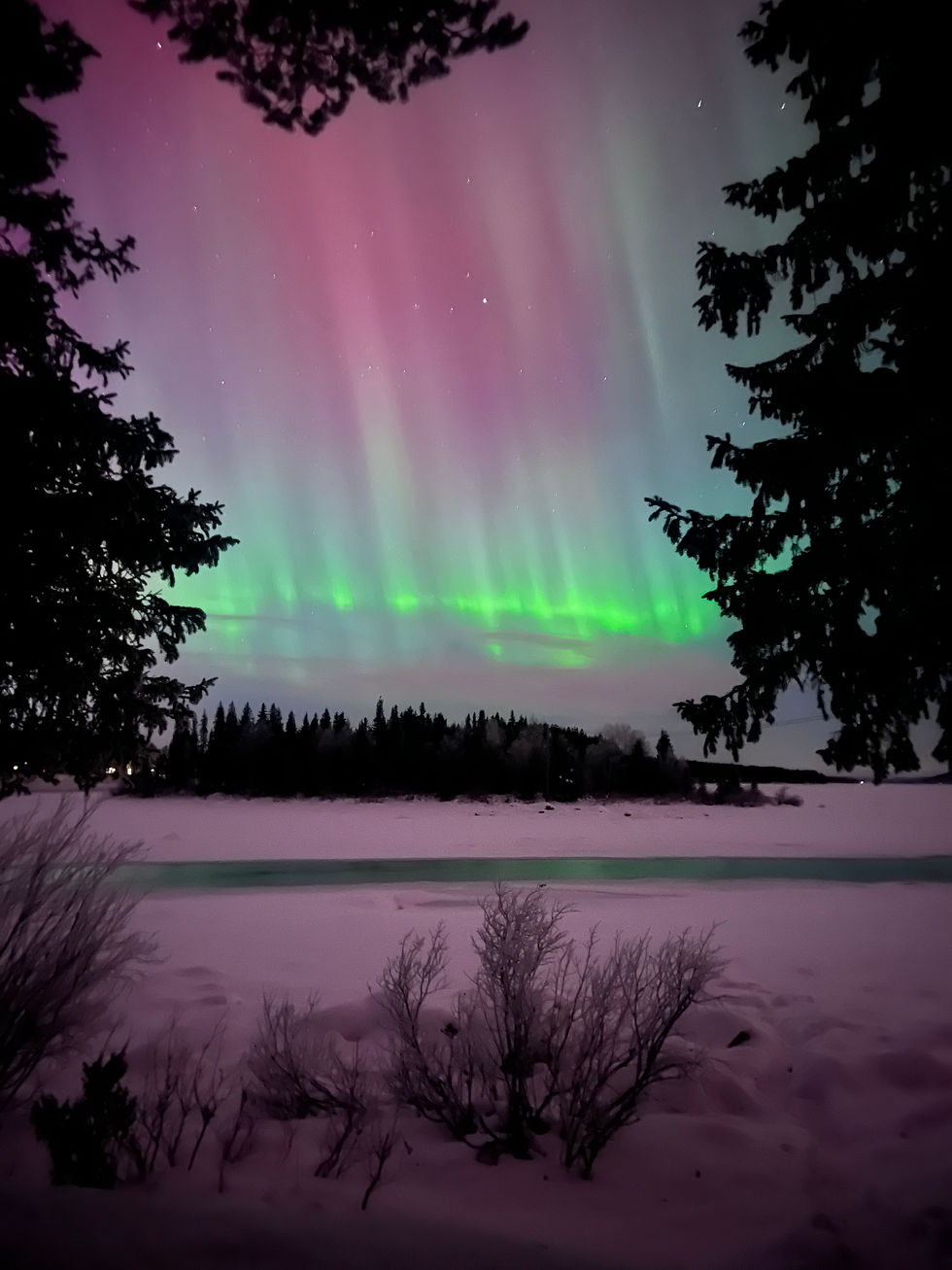
You might wonder what a wilderness fire and reindeer have to do with the Northern Lights. The answer is staying power. Because the Aurora requires so much patience, you cannot simply stand in a frozen field for four hours doing nothing. We build a fire and prepare a homemade stew not just for the meal, but to create a "basecamp." It keeps the energy high while we wait for that window in the clouds. While we wait, we share the true taste of the North—like our cured, smoked, and dried reindeer. I serve it this way because putting reindeer in a long-simmering stew kills the flavor; having it as a taster gives you the most intense, authentic taste of the North.
Does it ever get boring?
This is probably the question I get asked most often by guests sitting around the fire. After living in Sweden for six years and being out in the cold thousands of times, people assume the "novelty" must have worn off.
The truth is: No. It never gets boring. Actually, it’s better now than it was when I first started. Seeing the lights is amazing, but experiencing that "first-time" reaction through my guests is a whole different level of reward. When the sky ignites and I hear the gasps and see the pure joy on someone's face who has traveled halfway across the world for this moment—it makes all those long, cold drives worth it. I’m not just chasing the lights anymore; I’m chasing that shared experience. It’s as magical for me today as it was six years ago.


Comments